
Analysis of Colorectal Cancer in the US

After the news of Chadwick Boseman's death broke the internet last year, I have been conducting a lot of research on Colon Cancer. I chose colon and rectal cancer because I wanted to see how this disease affected people using data, and highlight the ways people could reduce their chances of getting this disease.
Reports show that ‘‘colon and rectal cancer, commonly referred to as colorectal cancer is the third leading cause of cancer-related deaths in men and women and the second most common cause of cancer deaths when men and women are combined.’’ I hope you find this as informative as I have.
Cancer is part of our life, but not our whole life — Nick Prochak
From this article, we will:
Identify the age group with the highest incidence
Identify the age group with the highest deaths
Identify the region with the highest incidence and deaths
Identify risk factors for this disease
Come explore with me.
APPROACH
After choosing the dataset, I decided to embark on some research to understand more about colorectal cancer. I found a lot of articles that were really helpful in developing my approach. My approach is summarized below:

RETRIEVING AND PREPPING DATA
I think the first step for any project is deciding what project topic or theme you want to work on. It is important to always pick something you can relate to or something you love. That being said, after deciding on colorectal cancer and getting the dataset from CDC wonder. The dataset covered colon and rectal cancer cases from 2015 to 2017 in the US. I moved to the next step of understanding the dataset and deciding what insights I wanted to derive from the data. The next thing I did was clean the data. I used Power BI for this. I dropped the part of the dataset that included notes and other information not relevant for this project.
IN-DEPTH ANALYSIS:
I used Power BI for the analysis of this project. From exploring the dataset, I was able to identify key features of this type of cancer that I will like to talk about. These features include:
Incidence rate:
From the visual below, it can be seen that people with the highest number of incidences are between the ages of 65 to 69. This is closely followed by people 60 to 64 years of age.

Mortality Rate:
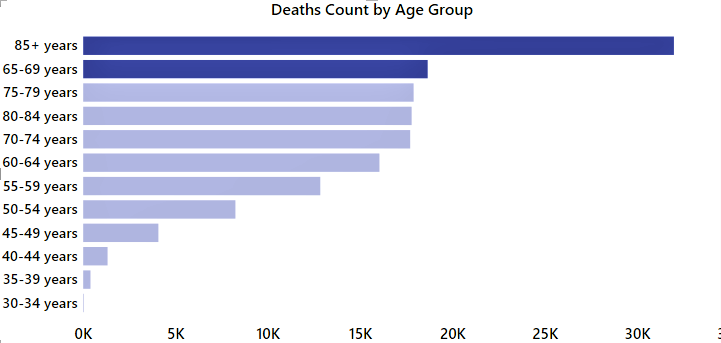
From the previous analysis, it was obvious that the age group 65 to 69 get the highest number of incidents for this cancer type. However, the highest number of deaths is recorded among people who are above 85. Which is closely followed by the age group with the highest number of incidents.
Incidence and Mortality Rate by Region:
Here I wanted to see the region with the highest number of incidents and deaths. From the analysis and the chart below, it can be seen that the South Region of the US has the highest number of incidents and deaths

Note: Other visuals show that men are more susceptible to develop this type of cancer and die from it, and the state with the highest number of cases and deaths is California.
RECOMMENDATION
The most important recommendation that can be given here is to go for a check-up. People with high risk are advised to go for check-ups. Some notable high-risk factors include; people above the age of 50, people with a history of colorectal polyps or colorectal cancer, people who are inactive and obese, people who eat more red meat and processed meat, and people who smoke. It is important for people who fall within these categories and are older to go for check-ups.
In conclusion, it is important for people with high-risk factors to pay attention to their health and control the risk factors that are controllable so as to reduce the chances of getting this disease.


Comments